

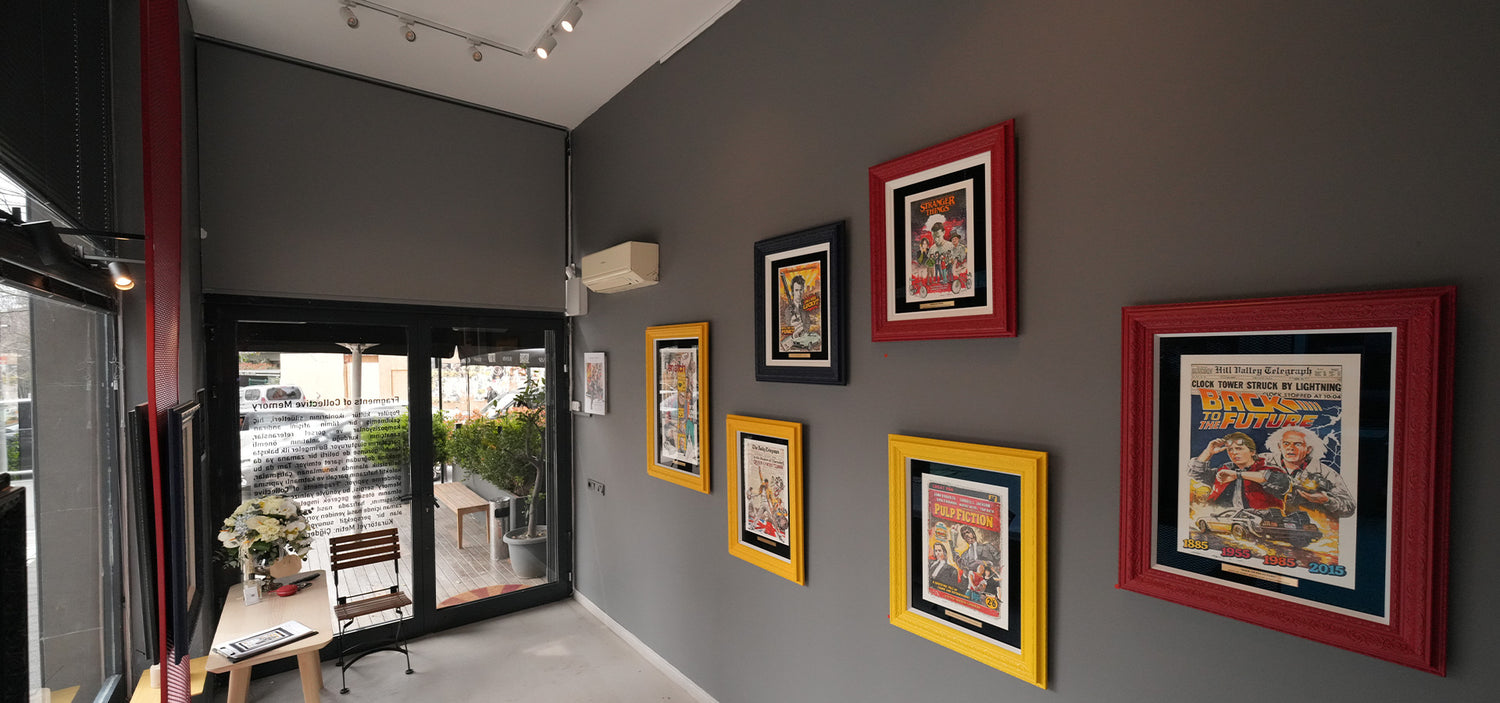
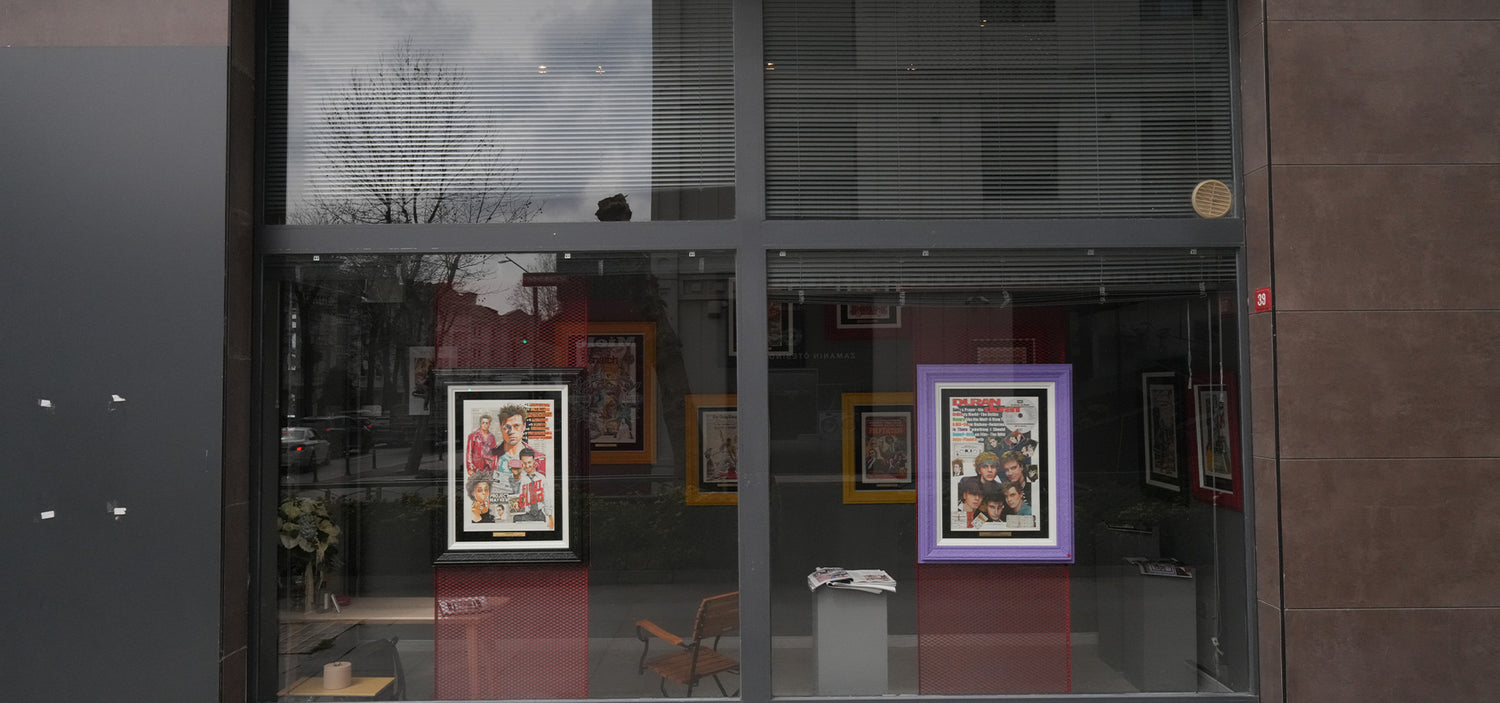
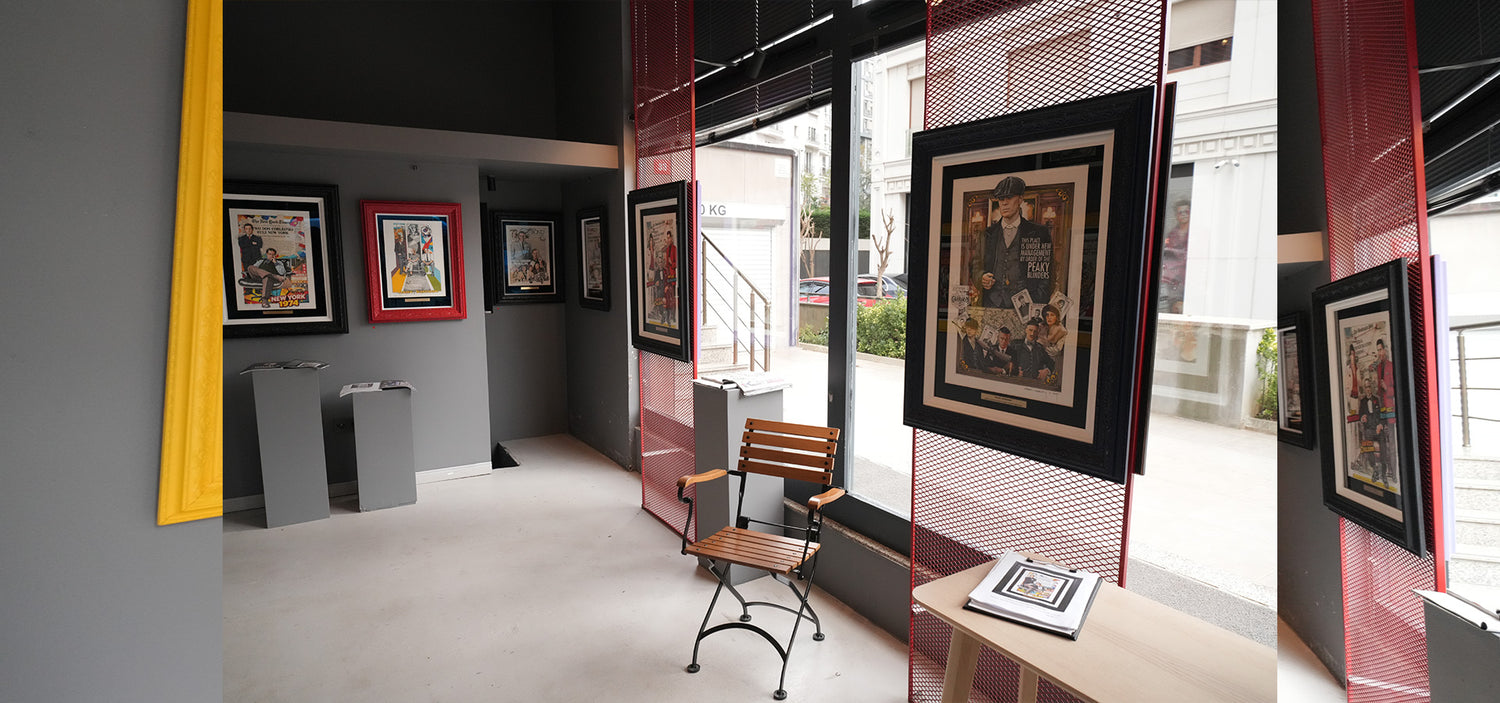
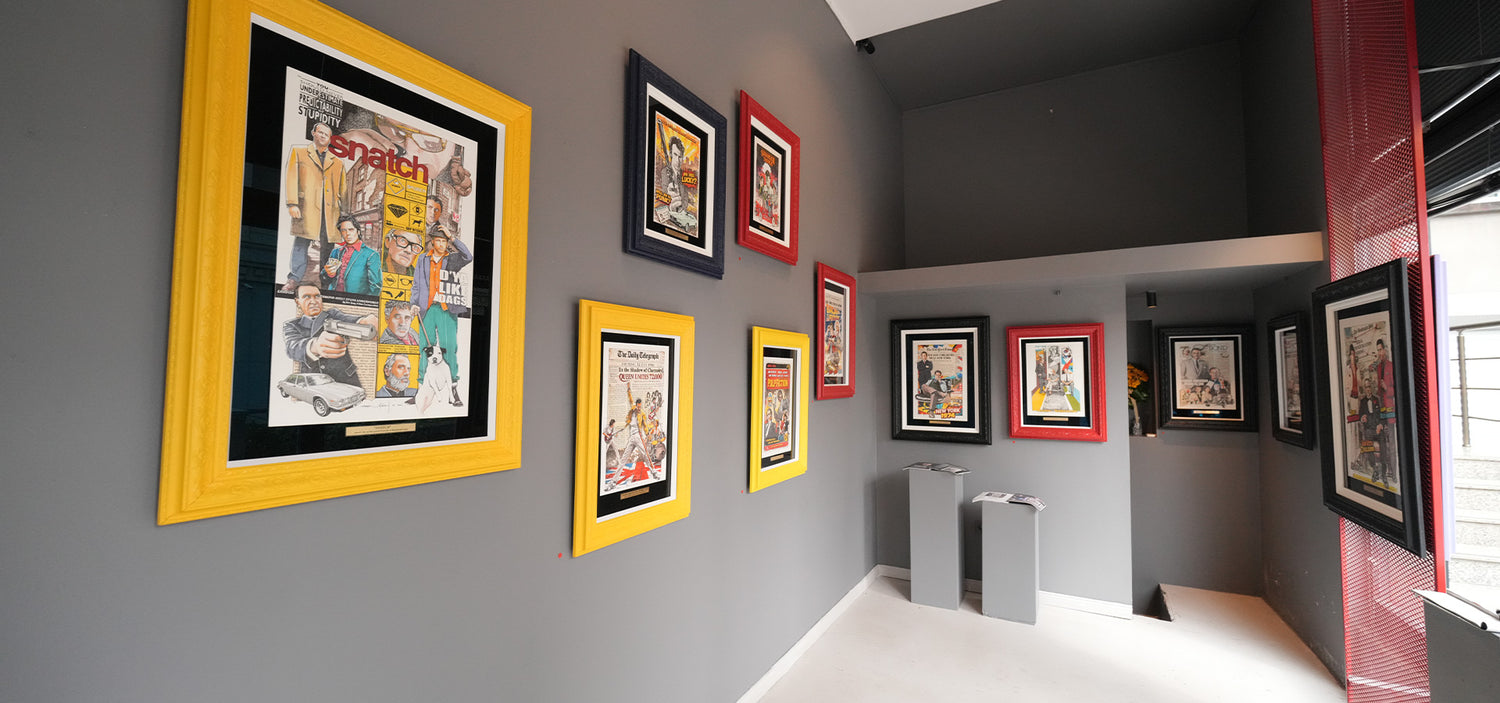
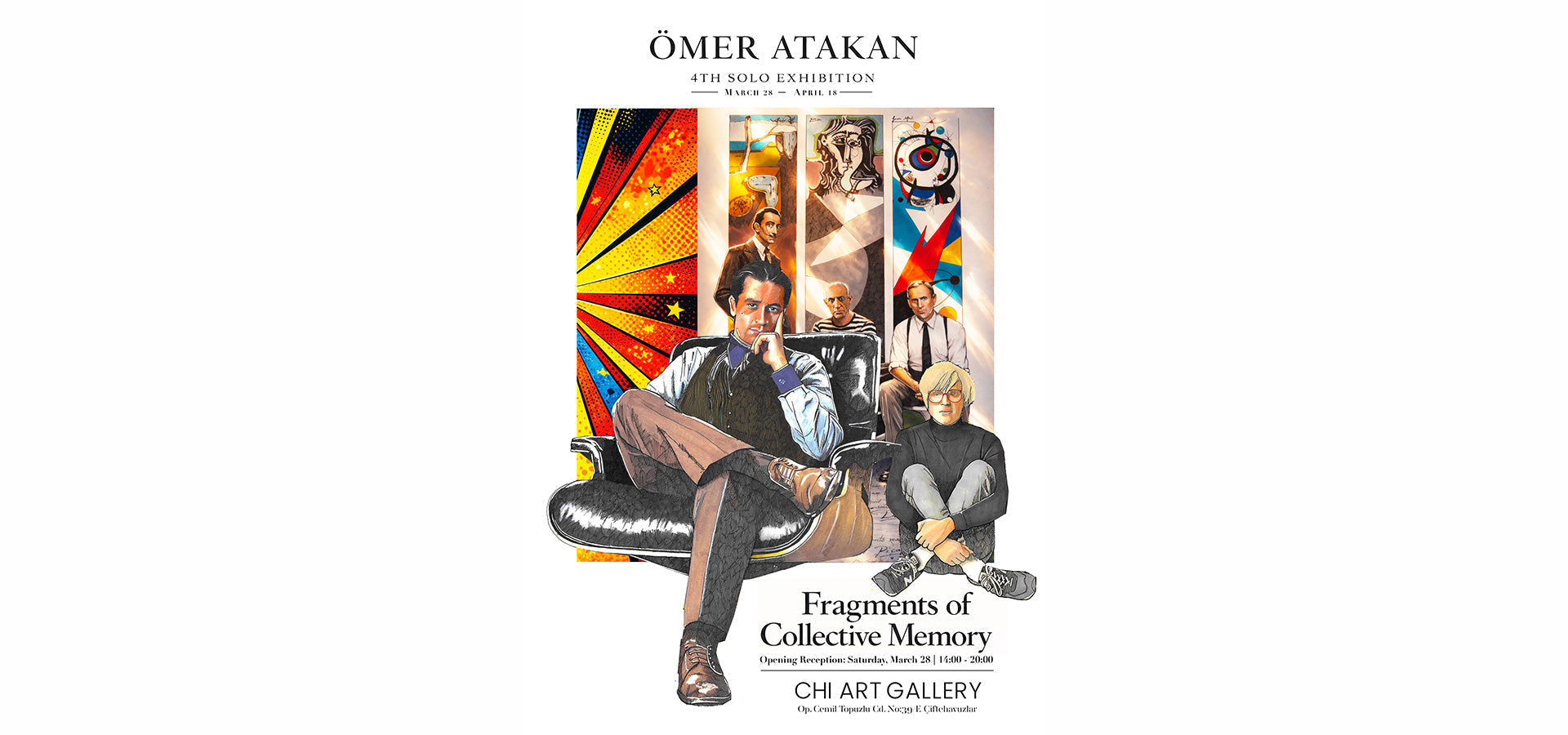
Over time, images from different periods, aesthetic references, and cultural traces that have found a place in our collective memory are brought back to life through hand drawings in architectural and cinematographic scenes, using an illustration-based approach. This approach creates a meeting point between different art movements. Cubism's structural thinking, Surrealism's free images opening up to the subconscious, and Pop Art's relationship with cultural icons coexist, creating a visual and collective richness. The artist's background in architecture distinctly shapes this visual language.
For Ömer Atakan, composition is not merely an aesthetic arrangement; it is a structure built in layers, almost an architecture. The surface transforms into a space where images shift, intersect, and reconnect.
Atakan's strong interest in cinema emerges as another element defining this architecture. Light, framing, and dramatic intensity often aim to present the works within a cinematic atmosphere. On these surfaces, the viewer encounters scenes that sometimes evoke the cinematic aesthetic of the 1970s, sometimes the silhouettes of popular culture icons, and sometimes images resembling a poster for a film that was never shot.
These images are not entirely familiar; yet, they are not entirely foreign either. They exist precisely in this interval, in the uncertain realm of collective memory.
In this sense, "Fragments of Collective Memory" is not just an exhibition; it opens up a space for reflection that questions how images circulate, how they are remembered, and how they are reconstructed over time. Ömer Atakan's works invite the viewer not only to look at the images but also to trace the imprints of their own visual memory.